.png)
How to Clean Boat Vinyl Without Damaging It
Boat vinyl has a hard job. It absorbs sunscreen, damp swimsuits, snack spills, fishing residue, and the humid conditions that make East Tennessee boating so enjoyable. Knowing how to clean boat vinyl correctly protects more than a clean appearance. It helps preserve the comfort, color, and value of the seating you use every weekend.
The goal is not to attack every mark with the strongest cleaner available. Quality marine vinyl responds best to a consistent, gentle process that removes contamination without drying the material, weakening its protective finish, or damaging the stitching.
Start With the Right Cleaning Approach
For routine cleanup, use a dedicated marine vinyl cleaner or a mild soap solution made with warm water. Choose a cleaner labeled safe for marine upholstery, then pair it with a soft microfiber towel or a soft-bristle interior brush. This is usually enough to handle surface dirt, sunscreen film, drink spills, and the light grime that builds up between outings.
Work in a shaded area whenever possible. Direct sun can cause cleaner to dry too quickly, leaving residue behind and making it harder to see where product has been applied. If your boat is at the dock, clean one seat section at a time rather than spraying the entire interior at once.
Always test a new product on a small, less-visible section first. Vinyl varies by manufacturer, age, color, and prior care. A product that works perfectly on one boat may be too aggressive for another, especially if the upholstery is older or has begun to dry out.
How to Clean Boat Vinyl Step by Step
Begin by removing loose debris. Brush away sand, crumbs, leaves, and pet hair from seams, hinges, and under seat cushions. Skipping this step can turn ordinary dirt into an abrasive paste once moisture is added.
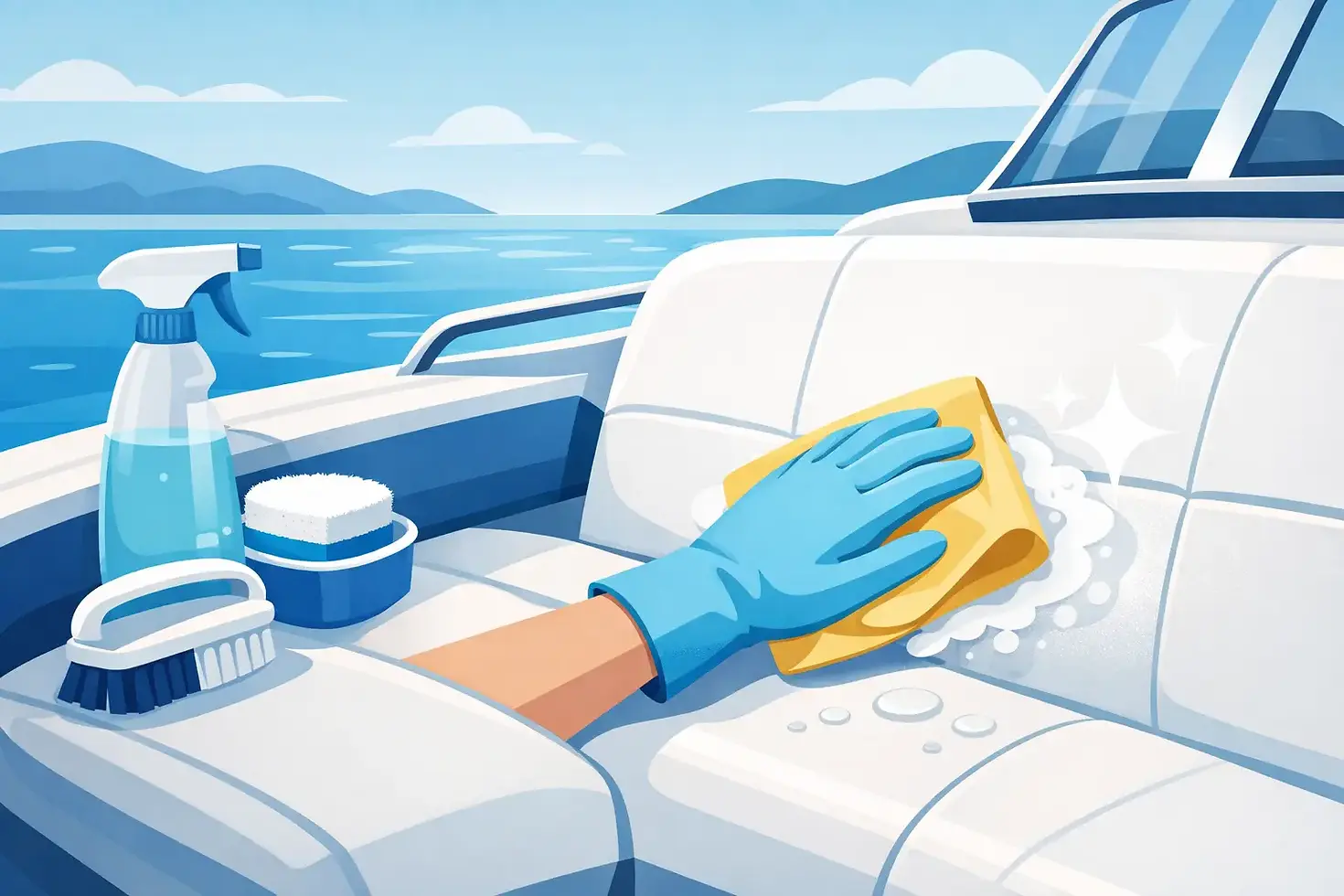
Next, spray your cleaner onto a microfiber towel or directly onto a manageable section of vinyl. Gently agitate the surface with a soft brush if needed, paying close attention to textured areas and stitched seams where body oils and sunscreen tend to collect. Use light pressure. The cleaner should do the work, not heavy scrubbing.
Wipe the area with a clean, damp microfiber towel to lift away the loosened residue. Follow with a dry towel so water does not sit in seams, around buttons, or beneath cushions. Repeat the process in small sections until the seating is consistently clean.
This simple method is the right answer for most regular maintenance. It keeps the interior looking fresh without exposing it to unnecessary chemicals or wear.
Do Not Let Cleaner Sit Too Long
One common mistake is spraying a strong product across the entire cockpit and allowing it to sit while you work elsewhere. Even vinyl-safe products can leave streaks or residue when they dry on the surface. On hot summer days, that can happen quickly.
Clean, wipe, and dry each section before moving on. It takes a little more attention, but it produces a more even finish and protects the upholstery over time.
Removing Sunscreen, Mildew, and Tough Stains
Some stains need a more targeted approach. The right solution depends on what caused the mark and how long it has been there.
Sunscreen is one of the most frequent culprits, particularly on white or light-colored seats. It can leave yellowing, dull patches, or a sticky film. Start with a marine vinyl cleaner and a soft brush. For stubborn sunscreen, use a manufacturer-approved vinyl stain remover, following its directions closely. Multiple gentle applications are safer than one aggressive attempt.
Food, beverage, and fish-related stains should be treated promptly. Blot fresh spills first rather than rubbing them deeper into the vinyl. Then clean with a mild vinyl-safe product and wipe dry. If a stain remains after cleaning, avoid escalating immediately to harsh household chemicals. Those products may remove the stain but leave the vinyl brittle, faded, or permanently discolored.
Mildew requires special care. It is not only a cosmetic issue. It often signals trapped moisture, poor airflow, a wet cover, or water collecting beneath cushions. Clean visible mildew with a marine vinyl cleaner formulated for mildew staining. Use a soft brush around seams, then rinse or wipe thoroughly and dry the entire area.
If mildew keeps returning, the cleaning process is only part of the fix. Check that seat compartments are dry, cushions can breathe, drains are clear, and the cover is not trapping moisture. Persistent mildew should be addressed before it works deeper into the material or surrounding upholstery foam.
What Not to Use on Marine Vinyl
The wrong cleaner can make seats look better for an afternoon and worse for the season. Avoid harsh degreasers, abrasive powders, stiff brushes, and household products not intended for marine vinyl. These can strip protective coatings, create dull spots, weaken stitching, or cause the material to feel dry and stiff.
Bleach is another product that deserves caution. While it is often suggested for mildew, it can damage vinyl and stitching if used improperly or too often. If a boat manufacturer specifically permits a diluted bleach solution for its upholstery, follow that guidance exactly. Otherwise, choose a purpose-made marine cleaner.
Avoid using petroleum-based products, acetone, gasoline, paint thinner, or strong solvents. They can cause immediate damage and may leave behind a shiny, slippery surface that attracts more dirt. A glossy seat is not necessarily a protected seat.
Condition and Protect After Cleaning
Cleaning removes contamination. Protection helps reduce how quickly that contamination returns. Once the vinyl is clean and fully dry, apply a non-greasy marine vinyl protectant that offers UV protection and is designed not to make seating slick.
A quality protectant helps preserve suppleness, reduce UV exposure, and make routine cleaning easier. This matters on open boats where seating spends long stretches in direct sun. Knoxville-area boat owners also contend with pollen, lake spray, humidity, and intense summer heat, all of which can shorten the life of neglected upholstery.
Apply protectant sparingly with a clean microfiber applicator, then buff away excess. More product is not better. A heavy coating can leave streaks, attract dust, or create an uncomfortable shine. The finish should feel clean and smooth, not oily.
Build a Routine That Fits Your Boating Schedule
Vinyl care works best when it is part of ownership, not a once-a-year recovery project. A quick wipe-down after a busy day on the water prevents sunscreen and spills from setting in. A deeper clean every few weeks during boating season keeps seats presentable and makes seasonal detailing far less demanding.
If your boat is used heavily, carries children or pets, or stays uncovered at the dock, it may need attention more often. If it is stored under a quality cover and used occasionally, a lighter maintenance schedule may be enough. The key is responding to what the boat is actually exposed to rather than waiting until the interior looks neglected.
Pay attention to early warning signs: yellowing on white vinyl, recurring mildew around seams, dryness near high-use seat edges, or water trapped beneath cushions. These small details can point to a cleaning need, a cover issue, or a developing maintenance concern.
When Professional Care Makes Sense
Routine cleaning is manageable for many owners, but deep staining, widespread mildew, embedded grime, and aging upholstery call for a more careful hand. Professional marine detailing can restore the interior without relying on the shortcuts that often create lasting damage.
A professional service also provides a useful second set of eyes. During an interior detail, signs of leaking compartments, damaged seams, failed snaps, or moisture problems can be identified before they become a more expensive upholstery repair. That proactive attention is part of the effortless ownership Vessel Valet is built to provide.
A clean boat interior changes how the whole vessel feels when you step aboard. Keep the process gentle, stay ahead of buildup, and your vinyl will be ready for the guests, lake days, and quiet sunsets that made you buy the boat in the first place.


Comments